Iceland Intel
Do you remember when, back in the early 2010s, you could book a one-way ticket to Iceland for about $50 on WOW Airlines? I mean sure, you had to pay for water and they gave you a colostomy bag to do your business, but man, what a time. Between the cheap flights, Game of Thrones fervor, and millennial gorpcore in full swing, Iceland has since lingered in our collective consciousness.
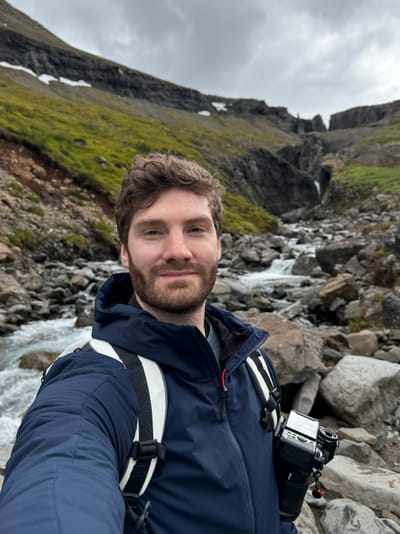
I’ve spent about a month in Iceland, just enough time to be familiar and have some perspective while also realizing you know nothing about anything. My first trip was in May of 2021, right as the country started easing COVID restrictions and allowing tourists back in and the Fagradalsfjall volcano was at full tilt. Truly a surreal experience. Then, last May, I returned to talk with my friend Haukur about his family’s incredible restaurant, Tjöruhúsið, up in the Westfjords. That project taught me more about Iceland and its people than I could’ve imagined, so if you’re planning a trip to Iceland I’d start there:
After my second extended bout in the country, I think I’ve learned a thing or two. Though this guide is a little different than one from Paris. Most folks aren’t going to Iceland for the food (though you can definitely find some good stuff); they’re going to take a picture in front of a really big waterfall. Or something like that. So this is not a guide per se, but rather some intel that might be useful. At the bottom, you’ll find a recommended route in the Westfjords and a map of places I’ve enjoyed and have served me well.
Getting Around
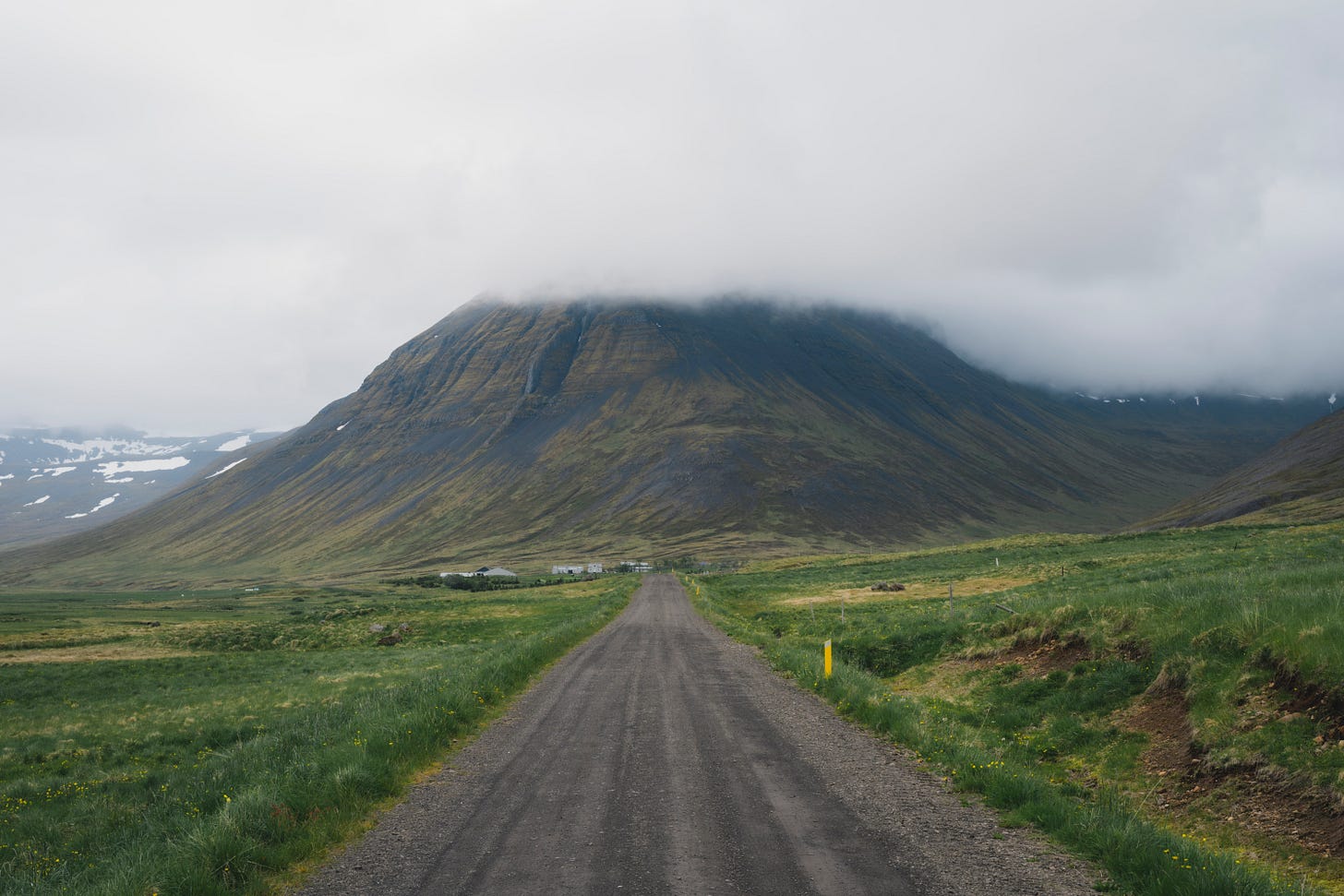
The ideal way to see Iceland is to rent a van or a truck and camp your way throughout the island. You’ll want unbridled freedom here. It’s a place where you’ll constantly find side quests - new places to explore, people you meet, etc. - so maintaining as much flexibility as you can is important. Having a car lets you keep your options open and your itinerary flexible.
I’ve rented from Happy Campers, which was a good experience, though I really dislike their obnoxiously bright cars. I’ve also rented from Go Campers, but the van they gave me was janky with bald tires and the customer service was poor, so I wouldn’t recommend them.
Regions
The classic well-traveled itineraries are the Ring Road and the Golden Circle. If you don’t have much time, the Golden Circle is a fine teaser, an amuse-bouche if you will, to Iceland. The Ring Road will circumnavigate the island except for the Westfjords. Both are pretty standard routes with plenty of resources out there to help you out. The Snæfellsnes Peninsula is an upgraded pick - more remote with excellent driving and camping.
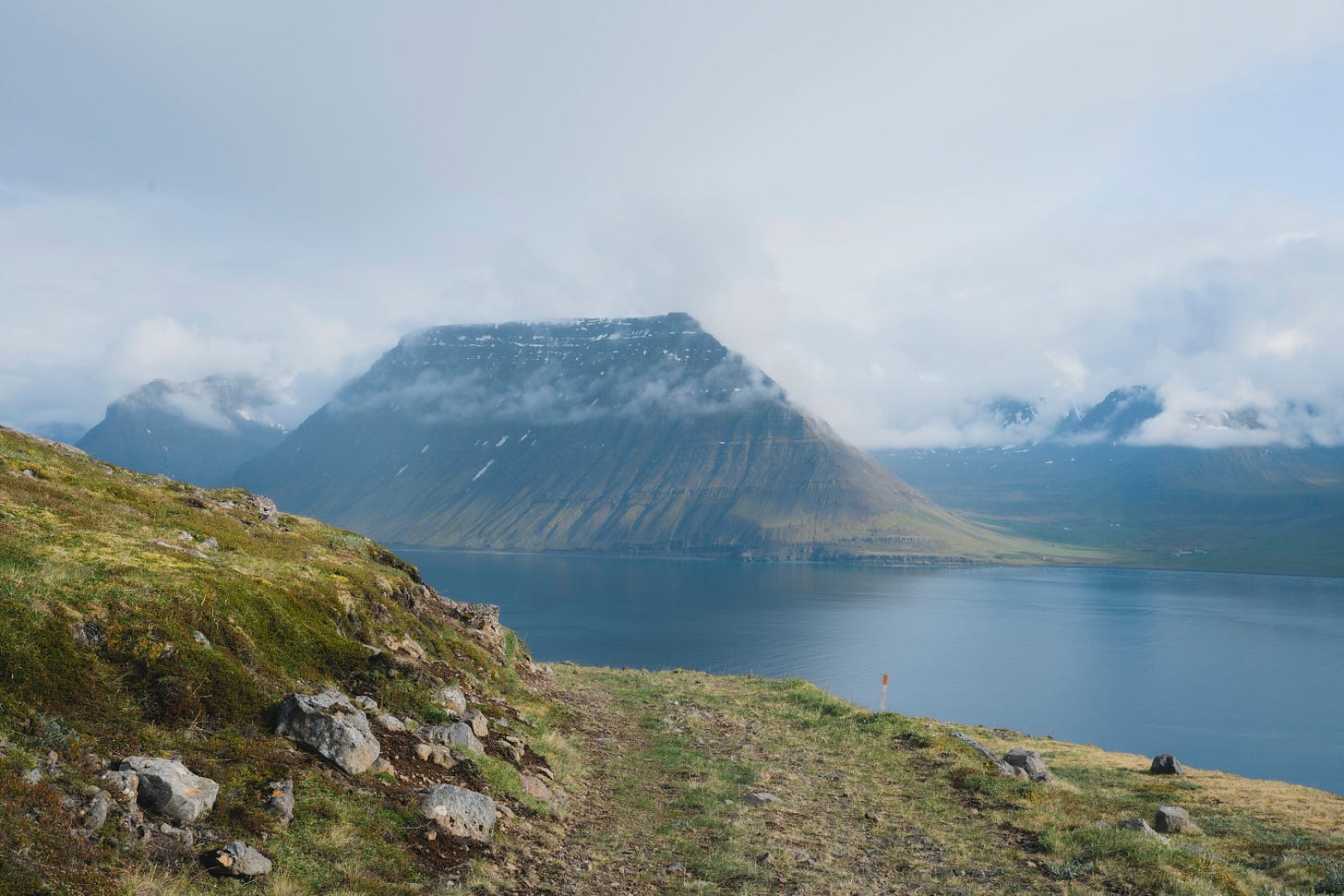
But by far, my personal favorite region is the Westfjords, the most remote area in Iceland. On a map, the Westfjords look like tendrils splaying out in the northwest corner of the island. It’s deep, and the days navigating the Westfjords are filled with hours on the road. A few miles as the crow flies can be hours in the car as you have to drive around the massive fjords. But the extra effort is immensely rewarding and the driving is spectacular. You’ll pass through small towns, remote campsites, roadside hot springs, waterfalls, puffins, and one of the best seafood meals you’ll ever have. There’s a special feeling up there, sitting between these great fjords feeling like you’re at the edge of the world.
Campgrounds
There are so many campgrounds in Iceland, all ranging from informal with minimal amenities to established spots with showers, communal kitchens, and even swimming pools. They’re cheap too, usually about $15-20 per night. There are plenty of maps out there with campgrounds, and wherever you rent your van from will likely have one online.
Unless you’re going in peak season and to a well-traveled spot, don’t bother booking any in advance, though even then you’ll probably be fine. Some of the campsites are only open in the high season, so if you’re going in May or October you’ll want to make sure they’re open. Google Maps is usually reliable, but check their website if it seems iffy.
When you decide where you’re going for the day, have one or two campgrounds in mind for that area. If you need electrical hookups for your van, make sure the campground can accommodate, most can but there are a few that might not.
Weather
You’ll most likely go to Iceland between May and October. The weather is going to be a crapshoot and will change daily, even hourly. Your best bet is to sketch out a tentative plan, with a few backup options. Each morning check Vedur.is for weather and Safe.is for road conditions and adjust your plans as needed. Shuffling your itinerary around won’t be a problem because you’re sleeping in your car and haven’t booked a campground.
During the summer months, you’ll have the midnight sun, which means 24 hours of light. That can be advantageous since you’ll have ample time to drive, hike, and photographers basically get perpetual golden hour after 10pm. But it’s also going to fuck with your sleep schedule quite a bit, so good luck.
Hiking
There are a few pre-defined trails that are worth a trek. One of the best hikes I’ve ever done is Glymur, and Valagil Waterfall near Ísafjörður was okay but relatively easy. Many hikes, especially in the Westfjords, aren’t clearly marked. After talking to some locals, I learned that the really good hikes are often just a random path, dirt road, or even trekking across someone’s property. The advice is if you see an interesting waterfall or feature off in the distance just pull over and start walking towards it. As long as there aren’t any fences you won’t get in trouble as long as you’re being respectful.
I’d definitely recommend going on a midnight hike if you’re up for it. And if you happen to be there while there’s an active volcano, congratulations.
Hot Springs (Hot Pots)
The unofficial rule is that if you see a hot spring (they call them hot pots) on the side of the road, you must stop in for at least a few minutes. I didn’t make that rule - some Icelanders told me about it - but it seems like a good one to follow especially after a long drive. They’re pretty common throughout the country, and they range from mud pits to pretty established spots with bathrooms. So be sure to keep a swimsuit and towel on hand.
Food and Drink
Food is going to be expensive. But since you’re renting a van, plan on loading up with snacks and cooking your own meals at the campsite. The real ones shop at Bónus, Icelanders’ favorite grocery store which has a bit of a cult following. Pick up some Bónus merch while you’re at it. Come with a few recipes that you can whip up on a simple stovetop. Don’t sleep on the Icelandic specialties like yogurt, flatkaka, rye bread, butter, and lox that are cheap and readily available. I essentially ate those for a week straight while on my last project there. Speaking of, you also might want some fiber supplements.
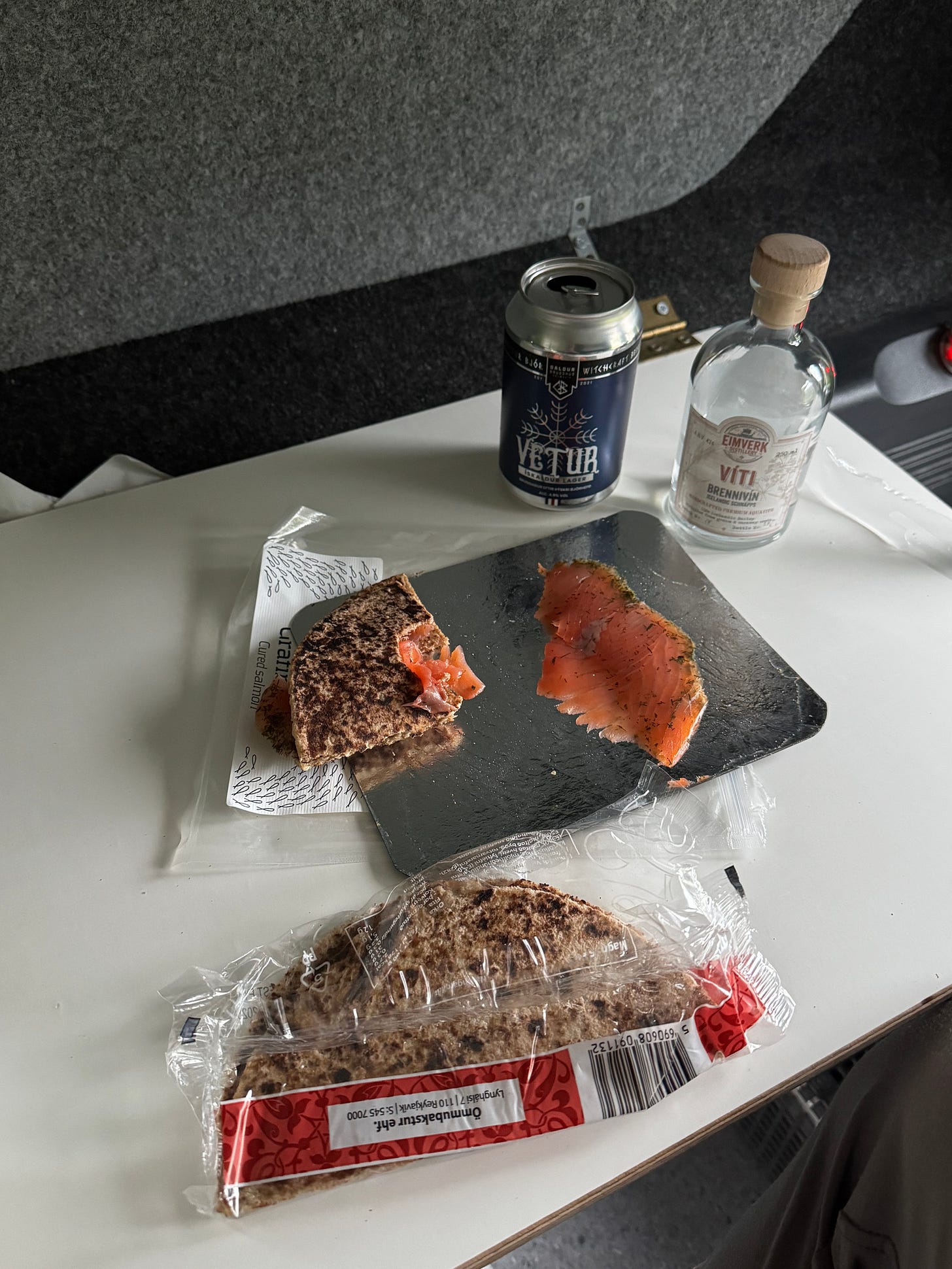
It’s worth noting that alcohol can only be bought at the government-run liquor stores, Vínbúðin, which have limited hours and locations. You can also buy from breweries or distilleries, of which there are a handful littered throughout the country. Be sure to try the local hooch, brennivín - it pairs quite nicely with some lox and rye bread.
There are definitely some restaurants worth a visit. If you’re going to eat at one restaurant, make it Tjöruhúsið in Ísafjörður. It’s one of the best meals in the world. I would fly all the way to Iceland and drive 6 hours to Ísafjörður just to eat there. Oh wait, I actually did do that.
Gear
In Iceland, the typical one-bag rules for your average trip apply to me. On my most recent trip, I used the Matador Globerider 35, which also worked well as a hiking backpack with its comfortable harness.
There are a few pieces of kit that are particularly useful:
- A power inverter to charge all my electronics (laptop, camera, microphones, etc.) at once in the car.
- The wind will be intense, so bring a wind-resistant jacket, beanie, and some gloves.
- An eye mask and earplugs to deal with the midnight sun, noisy campers, and birds that chirp all night (seriously).
- Swimsuit and towel for the hot springs.
- An Aeropress for morning coffee.
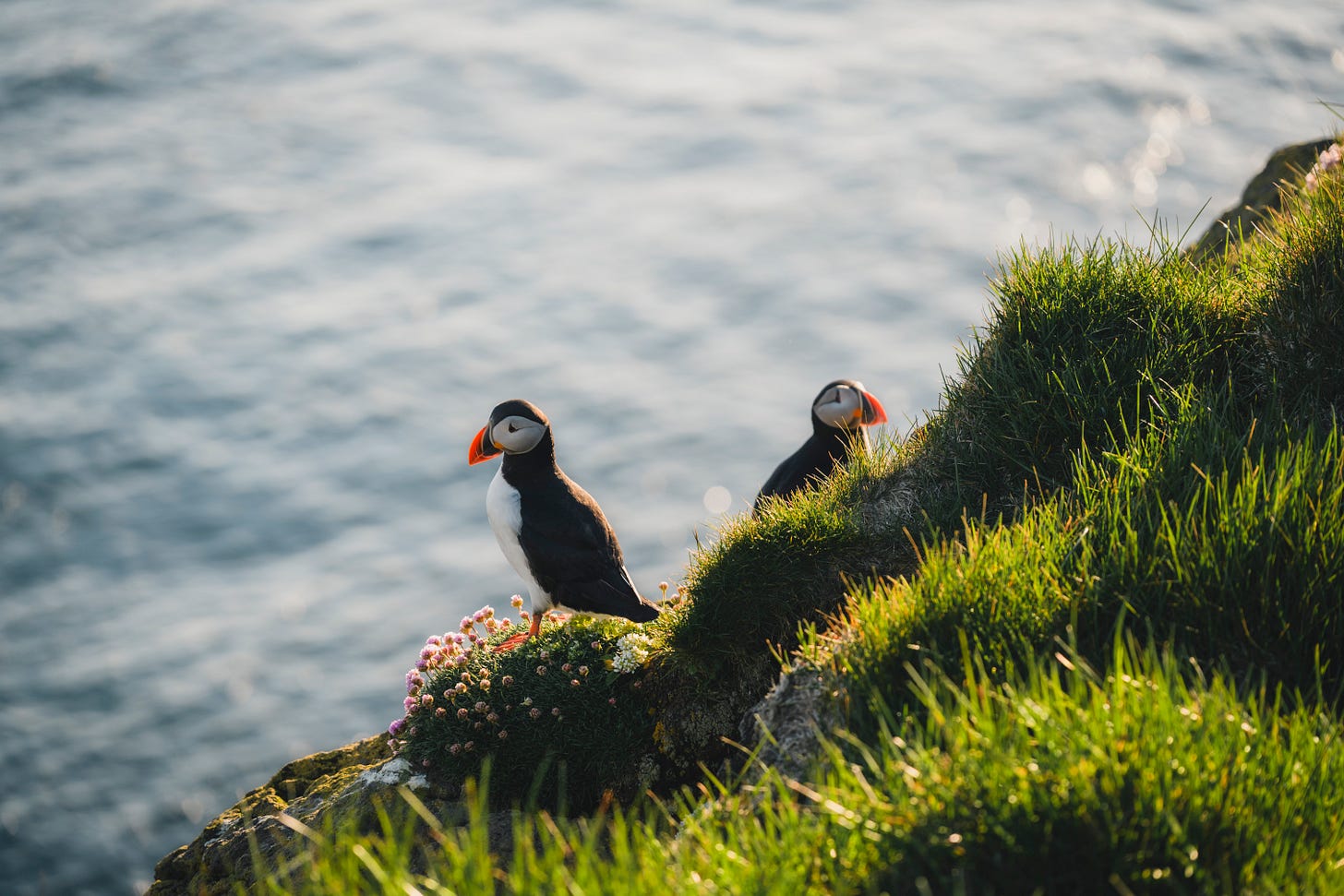
For my photographers out there, I traveled with two lenses - a 24-120mm f4 and a 40mm f2. I pretty much used the 24-120mm exclusively since that focal range was incredibly useful for landscapes and even portraits of puffins. You could definitely get a longer lens for puffins, but I travel light and found the 120mm to be juuuust enough.
The Route
If you had ~7 days, my route for the Westfjords would go something like this:
Day 1: In the morning, land at KEF Airport (likely after a red-eye from the U.S.). Pick up the rental car and head straight to Issi fish and chips for a quick lunch. Then head to the Bónus across the street for provisions. After you’re well supplied, venture into Reykjavík. Pick up some beans from Reykjavík Roasters so you’re well equipped for early mornings in the van. Make your way out of the city towards Mosskogar Camping for the night. Or, if you want to explore more of Reykjavík, stay in the Reykjavík Eco Campsite.
Day 2: Drive north towards Hólmavík (~3 hours), stopping at some hot springs along the way. Post up in Hólmavík for lunch and grab a beer at Galdur Brugghús. Buy a few extra beers for the next few nights in the van. Then head to Heydalur to camp for the night.
Day 3: Take a morning walk around the Heydalur grounds. There are some beautiful waterfalls nestled deep in the valley, though you’ll have to do a little bushwhacking. Then drive to Ísafjörður (~2 hours). Walk around town - coffee at Heimabyggð, beer at Dokkan Brugghús, and of course dinner at Tjöruhúsið (an absolute must and tell Haukur you said hi for me). Stay at Tunguskógur Campground for the night.
Day 4: Drive to Flateyri, a small fishing village that’s still relatively active. It’s perfect to meander around for the day, stopping for coffee and snacks at Bryggjukaffi and Gamla Bókabúðin (bookstore). Do some hiking in the area, there are a few trails near Flateyri with nice views of the surrounding fjords. Then a post-hike beer at Vagninn(they might have live music). Then stay at the Flateyri campground or Korpudalur HI Hostel farther off (they have a campground as well).
Day 5: Drive south toward Tálknafjörður (~2 hours). Stop at Dynjandi waterfall en route. Once you’re in Tálknafjörður, take a dip in the Pollurinn Hot Pools. For food, there’s a Self Service Fresh Fish stand that has nice chowder for cheap. Stay at the Tálknafjörður Campsite for the night.
Day 6: Head south towards Látrabjarg cliffs (~2 hours) to see some puffins (between May and August). The second half of the ride is pretty bumpy, so it’ll be a slow grind all the way to the cliffs. The catch here is that you’ll want to get to the cliffs in the evening, around 8-10pm to see the puffins back at their nests. After taking about 1,000 pictures of the puffins, head to Hotel Breiðavík for the night.
Day 7: After a morning walk on Breiðavík Beach, haul ass back to Reykjavík (5.5 hours). It’s going to be a long drive, and there’s not really a great way around this unless you have an extra day or so. Stop at the Krosslaug hot spring for a quick dip. If you need something close to the airport, stay at the Vogar Campsite for the night.
This is obviously just a rough sketch. Like I mentioned before, Iceland is the kind of place to find some side quests and go with it.
Map
Here’s a map of places I’ve enjoyed and have served me well, some not included in the route above:
A few highlights worthy of noting:
- Glymur Waterfall is one of my favorite hikes that has it all - waterfalls, views, river crossings - really good fun.
- Tjöruhúsið is the best seafood meal you’ll ever have.
- Reykjadalur Hot Spring Thermal River is a short hike to a thermal river that you can relax in. Bring some food and beer.
- Diamond Beach - this area and the surrounding glacier is just immensely beautiful.
- Flateyri is a great fishing village, and the surrounding fjord is just awesome.
- Drangsnes Swimming Pool - these hot pots made me feel like I was just sitting in a hot tub at the edge of the world.
On my next trip
Next time in Iceland the goal is some 4×4 through the highlands or some backpacking in the Hornstrandir Nature Reserve. If you’ve done either of those things, drop some knowledge in the comments!
No spam, no sharing to third party. Only you and me.
Member discussion